DAZ-S
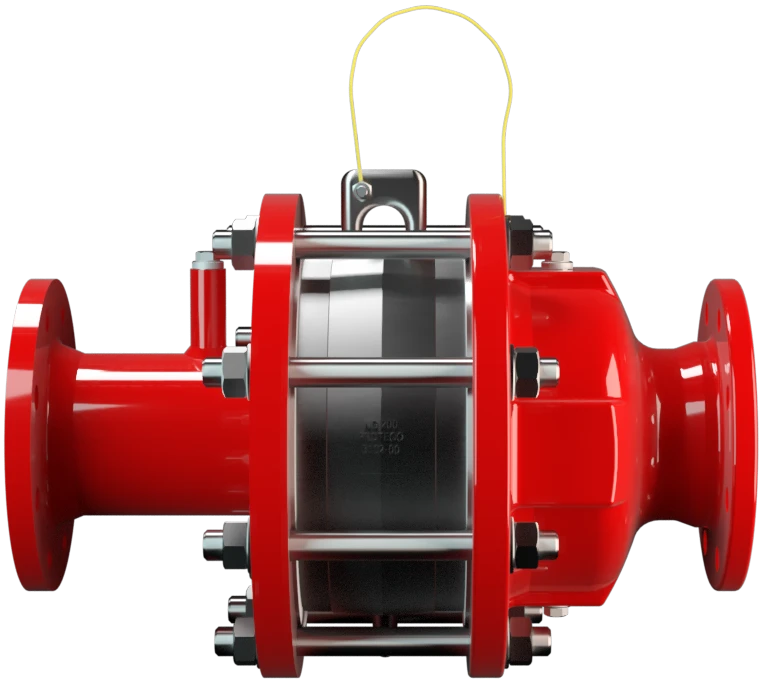
In-Line Detonation Flame Arrester for stable detonations and deflagrations in a straight through design, uni-directional
Features
State of the Art Protection
Low Costs
Extended Application Range
Temperature Sensors Possible
Modular Design
Spare Parts
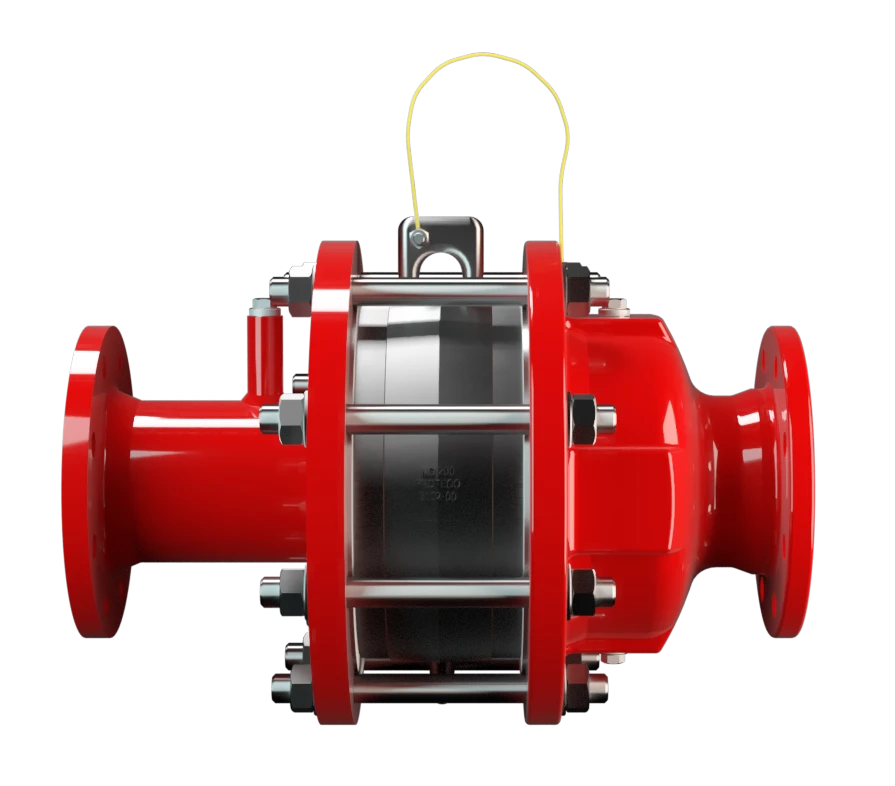
In-Line Detonation Flame Arresters with Shock Wave Guide Tube Effect
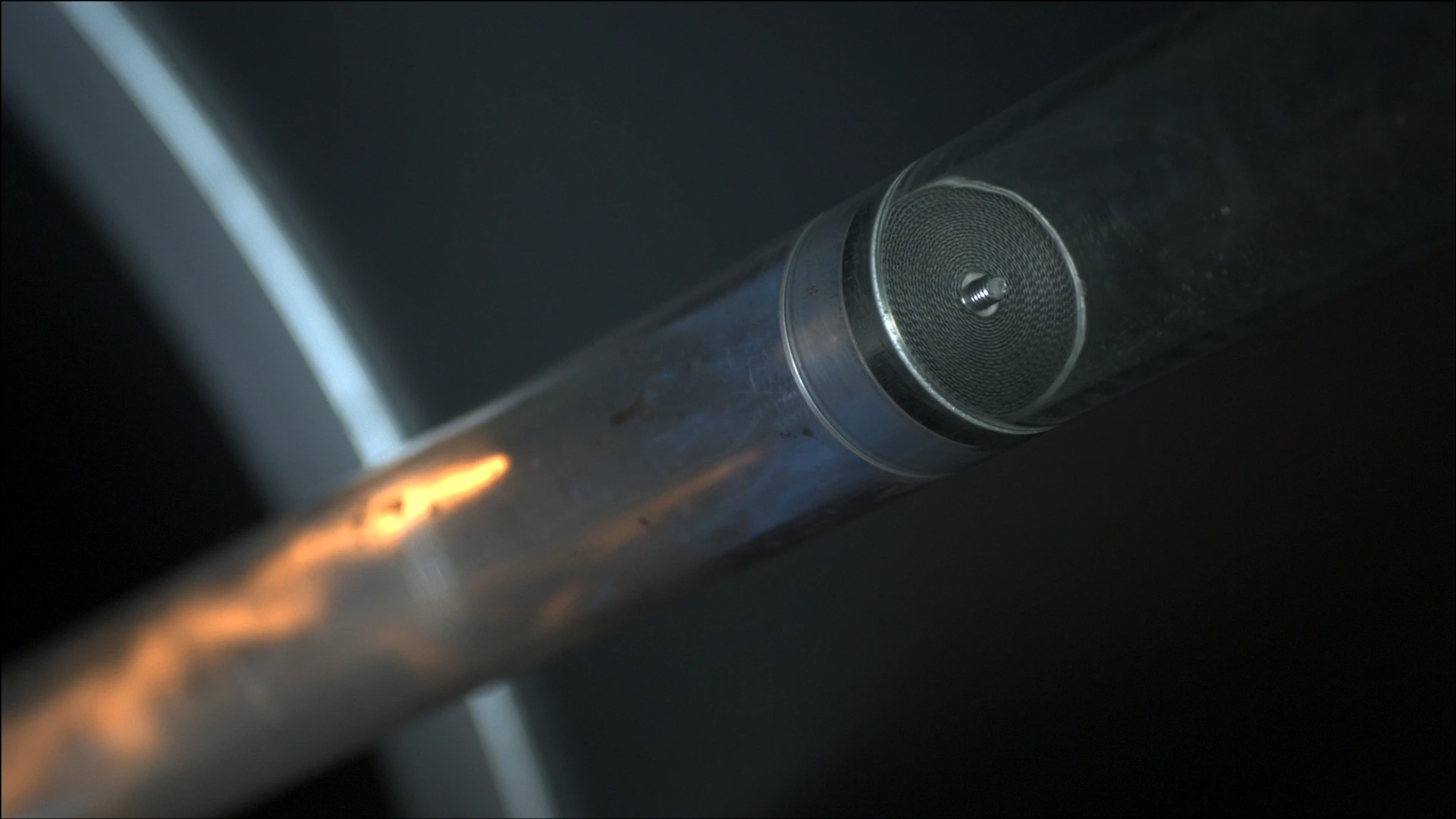
Main Component – PROTEGO® Flame Arrester Unit

Many Individual Certifications
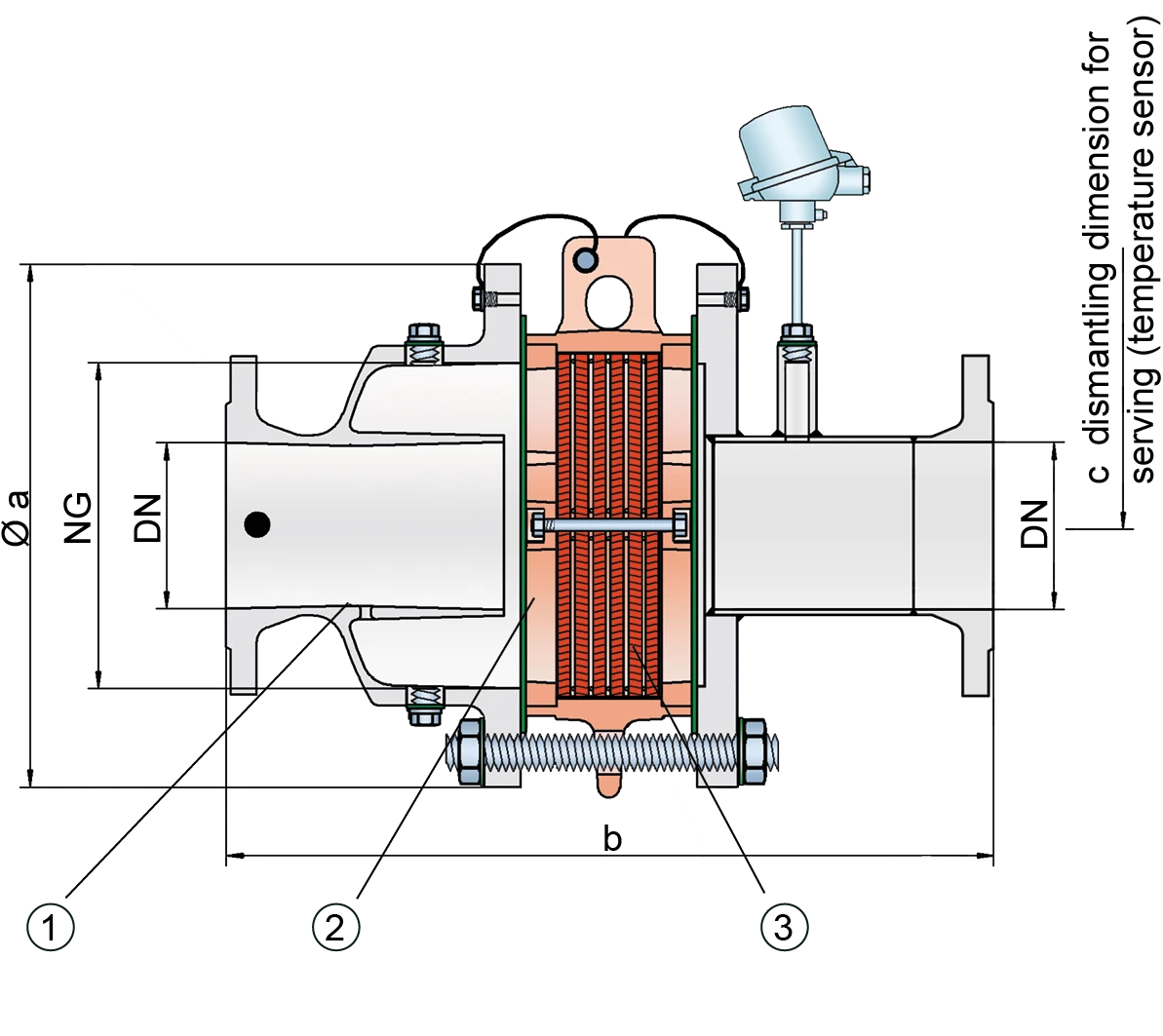
Dimensions
To select nominal width/nominal size (NG/DN) - combination, please use the flow capacity charts on the following pages
Additional nominal width/nominal size (NG/DN) - combinations for improved flow capacity upon request
| NG | 200 / 8" | 300 / 12" | |
| DN | ≤100 / 4" | ≤150 / 6" | |
| a | 340 / 13.39 | 445 / 17.52 | |
| b | IIC-P1,2-X2 | - | 640 / 25.20 |
| IIC-P1,2-X3 | 500 / 19.69 | - | |
| IIC-P1,3 | - | 640 / 25.20 | |
| c | 415 / 16.34 | 570 / 22.44 |
Dimensions in mm / inches
Selection of explosion group
| MESG | Expl. Gr. (IEC / CEN) | Gas Group (NEC) |
| < 0,50 mm | IIC | B |
Special approvals upon request
Selection of max. operating pressure
| Marking | NG | 200 / 8" | 300 / 12" |
| DN | ≤100 / 4"' | ≤150 / 6" | |
| IIC-P1,2-X3 | Pmax | - | 1,2 / 17.4 |
| IIC-P1,2-X2 | Pmax | 1,2 / 17.4 | - |
| IIC-P1,3 | Pmax | - | 1,3 / 18.9 |
Pmax = maximum allowable operating pressure in bar / psi absolut, higher operating pressure upon request
in-between size up to Pmax upon request
Specification of max. operating temperature
| ≤ 60°C / 140°F | ≤ 180°C / 356°F | ≤ 200°C / 392°F | Tmaximum allowable operating temperature in °C |
| - | X2 | X3 | Designation |
Higher operating temperatures upon request
Material selection for housing
| Design | A | B |
| Housing | Steel | Stainless Steel |
| Heating jacket (DAZ-S-(T)-H-...) | Steel | Stainless Steel |
| Gasket | PTFE | PTFE |
| Flame arrester unit | A, B | B |
The housing is also available in carbon steel with an ECTFE coating.
Special materials upon request
Material combinations of flame arrester unit
| Design | A | B |
| FLAMEFILTER® cage | Steel | Stainless Steel |
| FLAMEFILTER®* | Stainless Steel | Stainless Steel |
| Spacer | Stainless Steel | Stainless Steel |
*Special materials upon request
Flange connection type
| EN 1092-1; Form B1 |
| ASME B16.5 CL 150 R.F. |
other connections upon request
Flow Capacity Chart
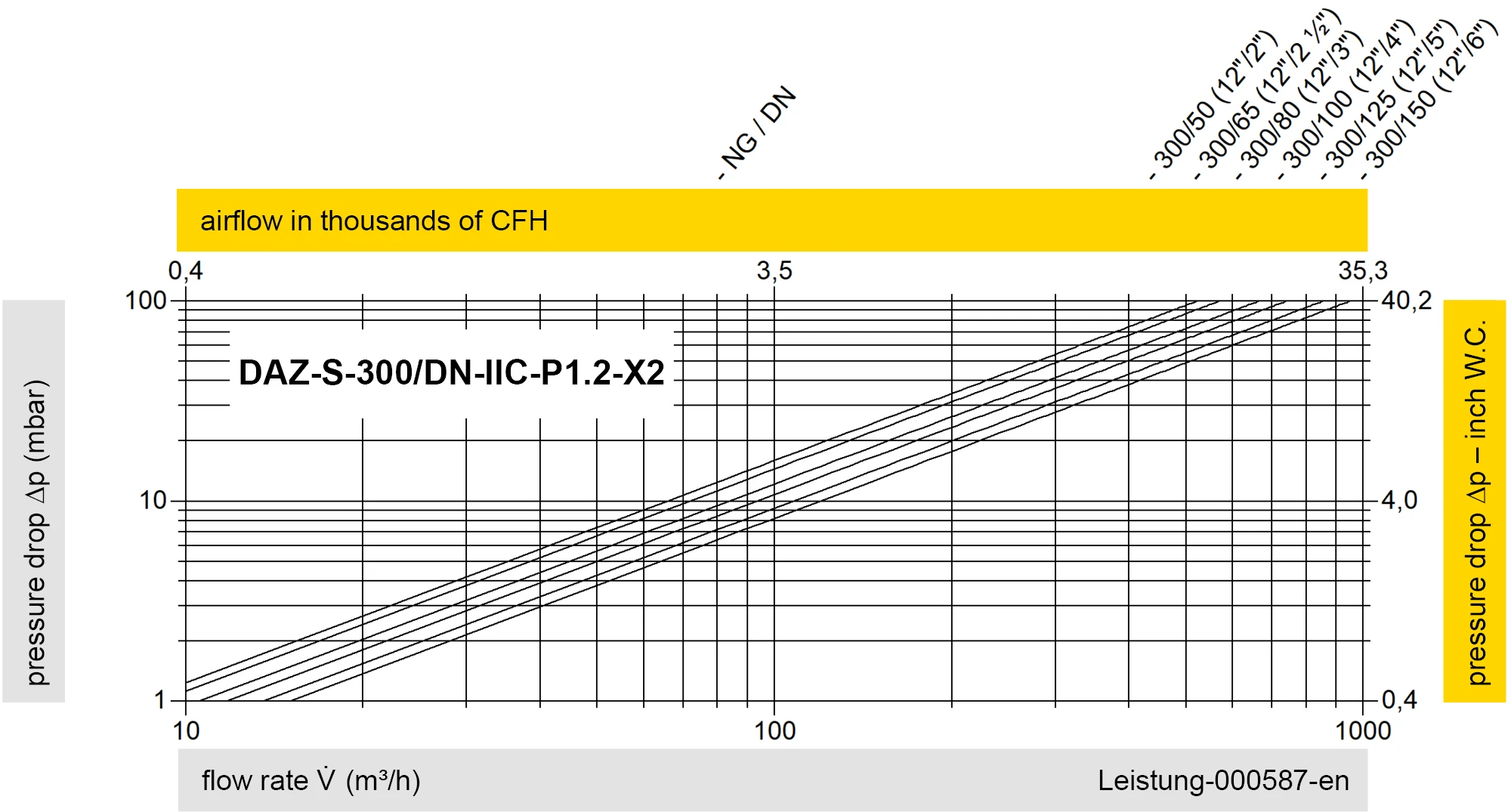
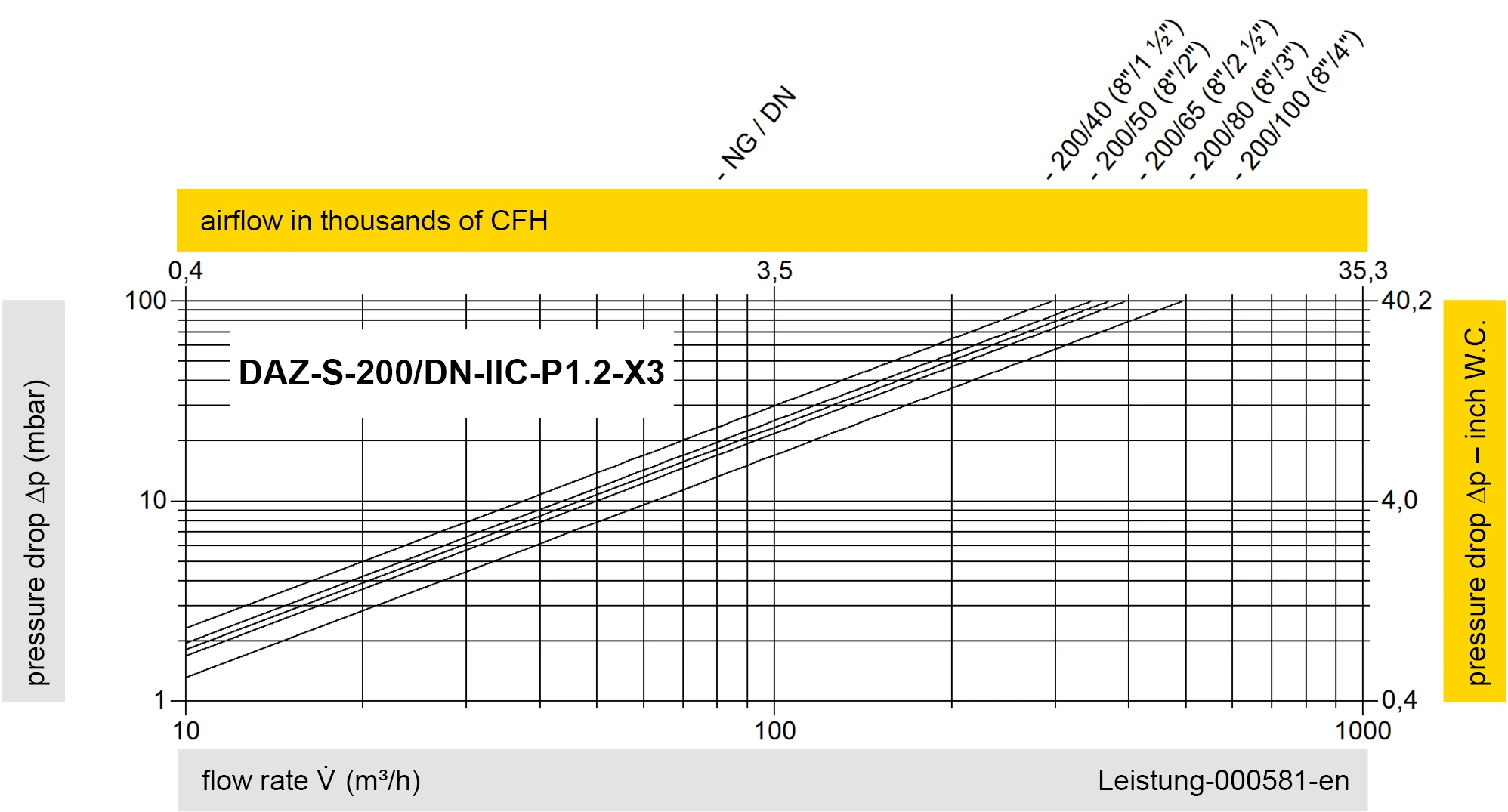
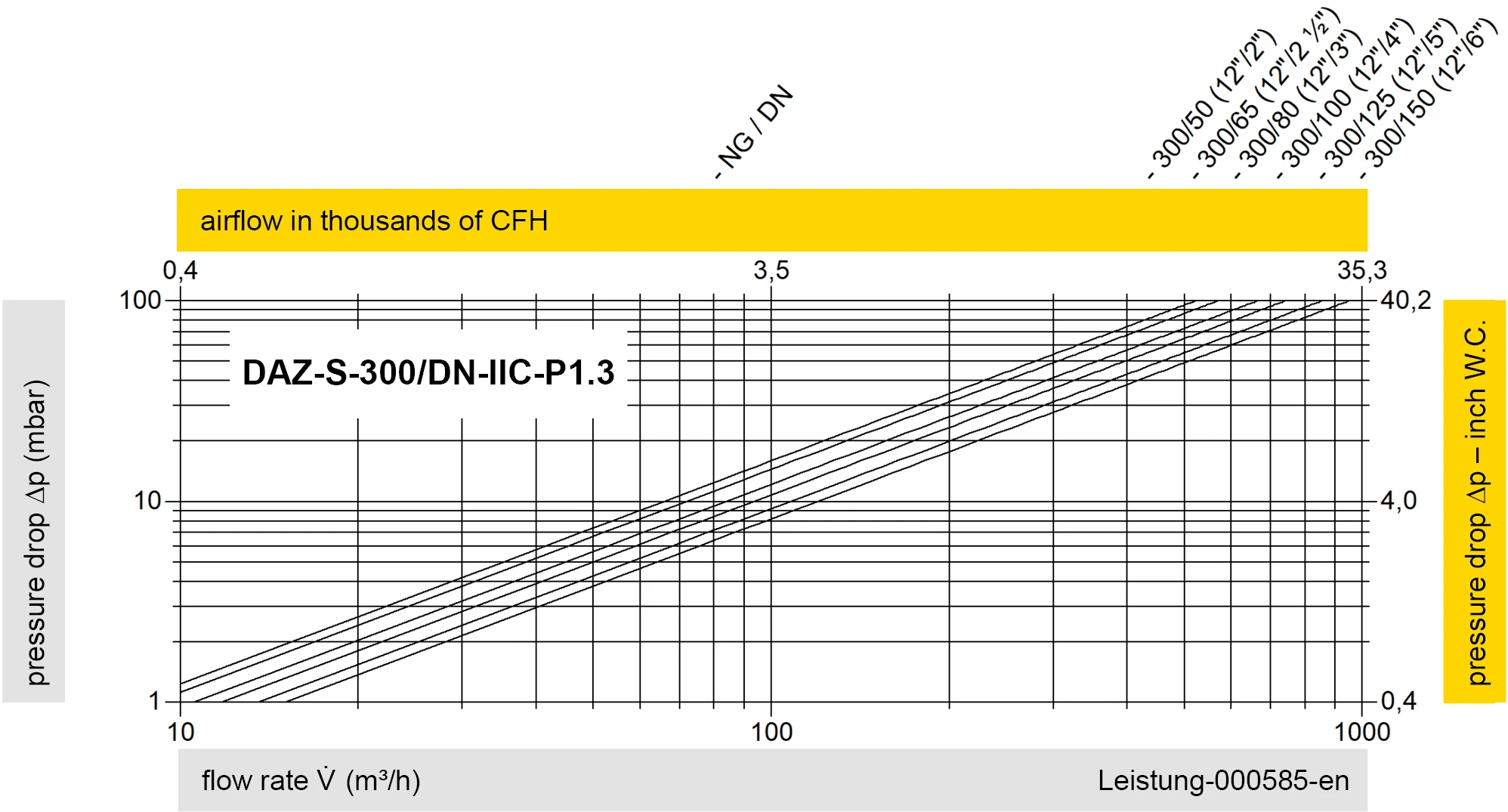
The flow capacity charts have been determined with a calibrated and TÜV certified flow capacity test rig. Volume flow V in (m³/h) and CFH refer to the standard reference conditions of air ISO 6358 (20°C, 1bar). For conversion to other densities and temperatures refer to Sec. 1: “Technical Fundamentals”.