VN-VL-L
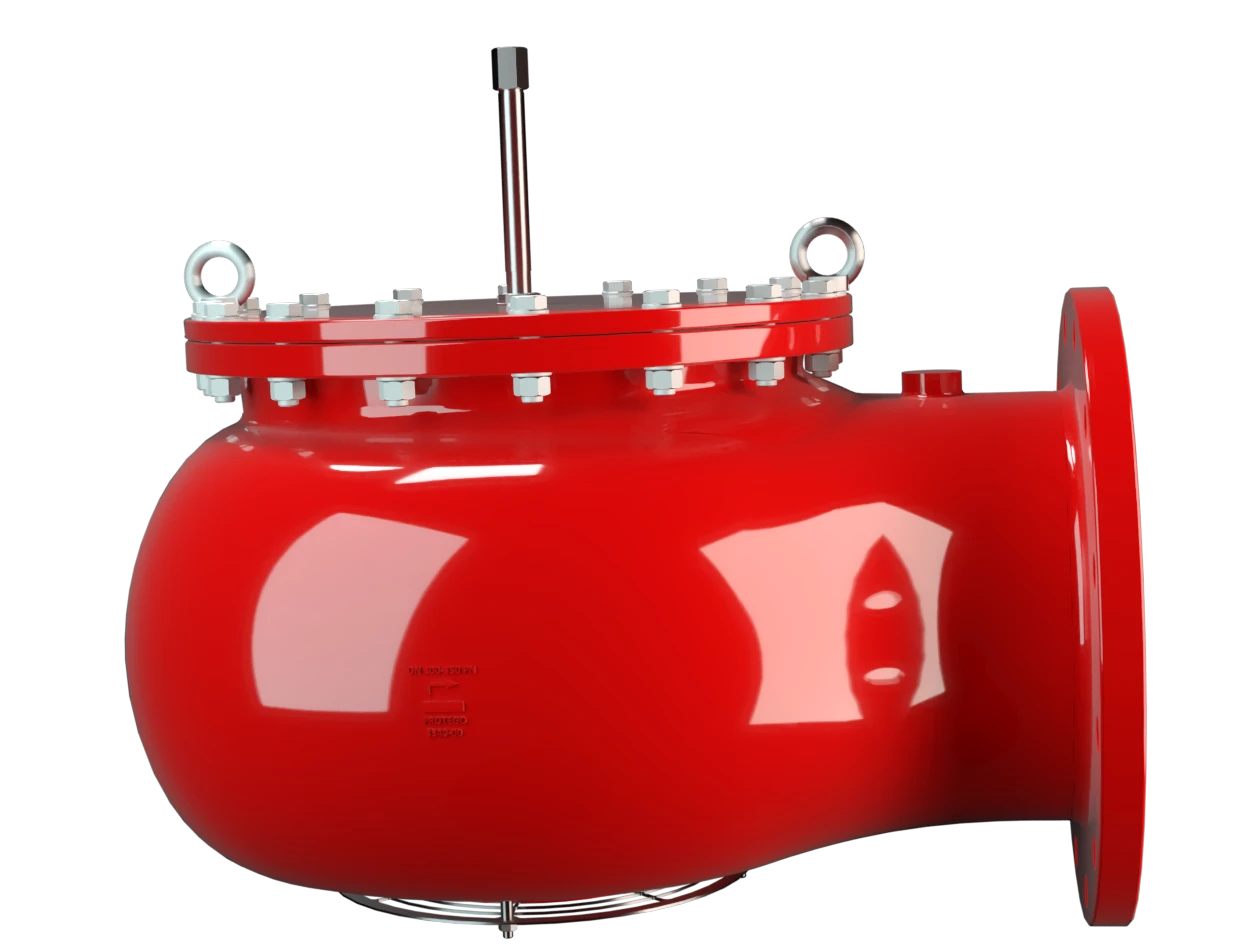
Válvula de vácuo
Features
Tecnologia de 10%
para aumento mínimo de pressão até a abertura total
Estanqueidade extrema
Resulta nas menores perdas possíveis de produto e na redução do impacto ambiental
Manutenção ideal da pressão
Pressão de ajuste próxima à pressão de abertura para manutenção ideal da pressão no sistema
Capacidade de vazão
Capacidade de vazão otimizada
Disco da válvula guiado
O disco da válvula é guiado dentro do corpo, protegendo contra condições climáticas severas
Uso em áreas com risco de explosão
Pode ser utilizado em áreas com risco de explosão
Drenagem de condensado
Dreno automático de condensado
Function and Description
Highly Developed Vacuum Relief Valve
The VN-VL-L Type PROTEGO® valve is a highly developed vacuum relief valve with excellent flow performance. It is primarily used as a device for relieving vacuum in tanks, containers, and process engineering equipment. The valve offers reliable protection against vacuum and prevents in-breathing of air close to the set pressure.
Full Lift Technology
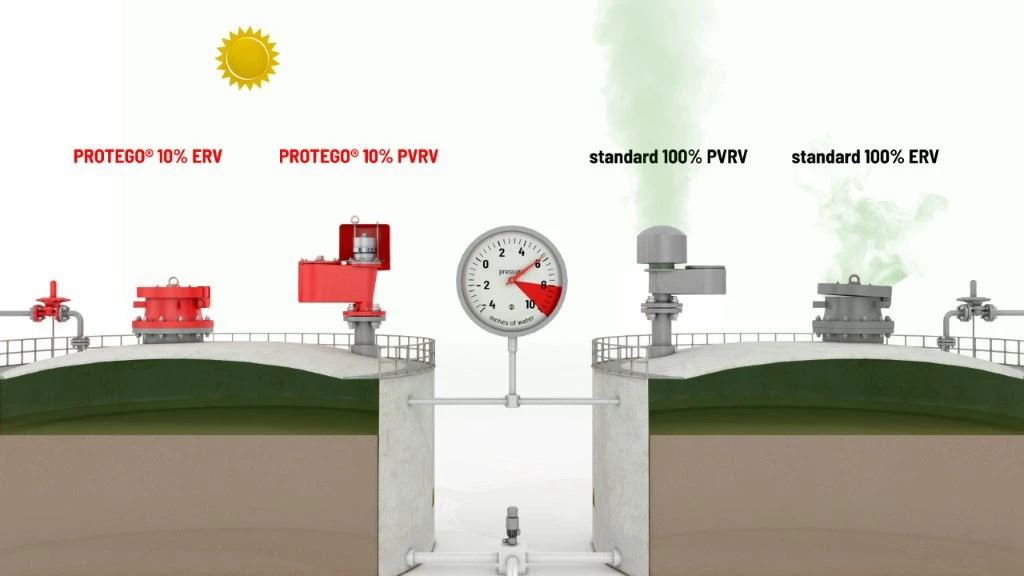
The device will start to open as soon as the set pressure is reached and only requires 10% overpressure to reach full lift. Continuous investments in and a commitment to research and development have allowed PROTEGO® to develop a low pressure valve which has the same opening characteristics as a high pressure safety relief valve.
This “Full Lift Type” technology allows the valve to be set at just 10% below the maximum allowable working pressure of the tank and still safely vent the required mass flow.
Advanced Manufacturing Technology
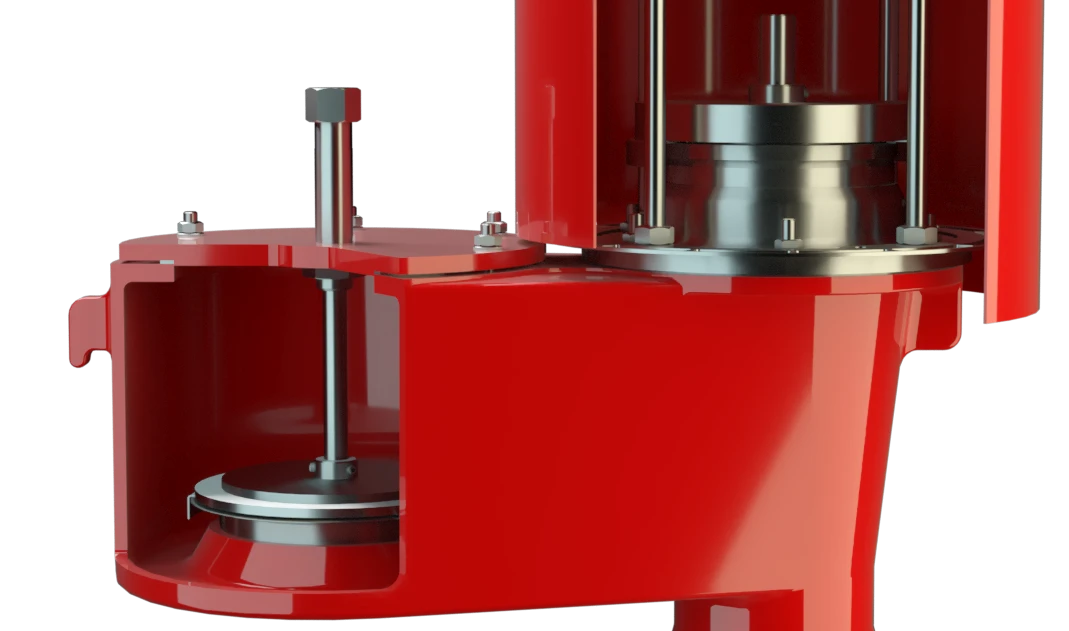
Due to our highly developed manufacturing technology, the tank pressure is maintained up to set pressure with a tightness that is far superior to the conventional standard. This feature is achieved by valve seat made of high quality stainless steel and with precisely lapped valve pallets (1). After the vacuum is released, the valve reseats and provides a tight seal again.
Product Data
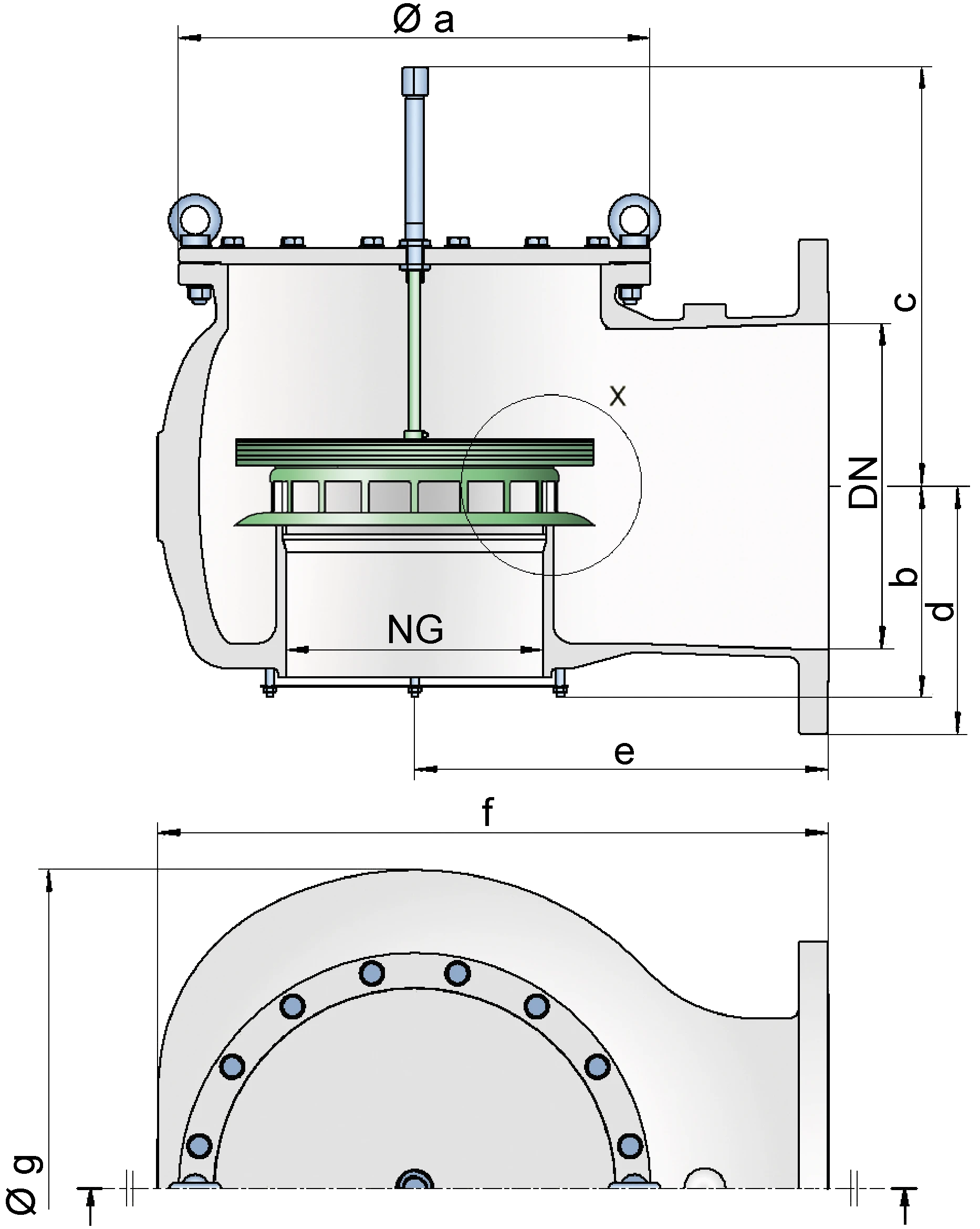
Tabela de dimensões
| NG | 300 / 12" | 300 / 12" | 300 / 12" |
| DN | 300 /12" | 350 / 14" | 400 /16" |
| a | 570 / 22.44 | 570 / 22.44 | 570 / 22.44 |
| b | 215 / 8.46 | 235 / 9.25 | 255 / 10.94 |
| c | 467 / 18.17 | 487 / 19.17 | 507 / 19.96 |
| d | 243 / 9.57 | 268 / 10.55 | 298 / 11.73 |
| e | 500 / 19.69 | 500 / 19.69 | 500 / 19.69 |
| f | 810 / 31.89 | 810 / 31.89 | 810 / 31.89 |
| g | 770 / 30.31 | 770 / 30.31 | 770 / 30.31 |
Dimensões em mm
Dimensões para a válvula de vácuo com camisa de aquecimento sob solicitação
Seleção do material do corpo
| Design | A | B | C | E | F |
| Design Data | 2 bar/60°C | 2 bar/200°C | 2 bar/200°C | 16 bar/60°C or 10 bar/200°C | 16 bar/60°C or 10 bar/200°C |
| Housing | Aluminium | Steel | Stainless Steel | Steel | Stainless Steel |
| Valve seat | Stainless Steel | Stainless Steel | Stainless Steel | Stainless Steel | Stainless Steel |
| Protective grating | Stainless Steel | Stainless Steel | Stainless Steel | Stainless Steel | Stainless Steel |
| Sealing | PTFE | PTFE | PTFE | PTFE | PTFE |
Os corpos também podem ser fornecidos com revestimento de ECTFE
Materiais especiais sob solicitação
Seleção do material do disco da válvula de vácuo
| Design | C | D | E | F |
| vacuum range [mbar] [inch W.C.] | -2.7 up to -4.6 -1.08 up to -1.84 | -4.6 up to -7.9 -1.84 up to 3.16 | -7.9 up to -13.5 -3.16 up to -5.4 | -13.5 up to -70 -5.4 up to -28 |
| Max. Back pressure (up to 60°C) [mbar] [inch W.C.] | 390 156 | 2700 1080 | 930 372 | 6400 2560 |
| Valve pallet | Aluminium, thin | Aluminium, thick | Stainless Steel, thin | Stainless Steel, thick |
| Sealing | Metal to Metal | Metal to Metal | Metal to Metal | Metal to Metal |
Materiais especiais (alumínio revestido, titânio, Hastelloy) e ajustes de vácuo mais altos sob solicitação
Tipo de conexão flangeada
| EN 1092-1; Form B1 |
| ASME B16.5 CL 150 R.F. |
Outras conexões sob solicitação
Diagrama de vazão
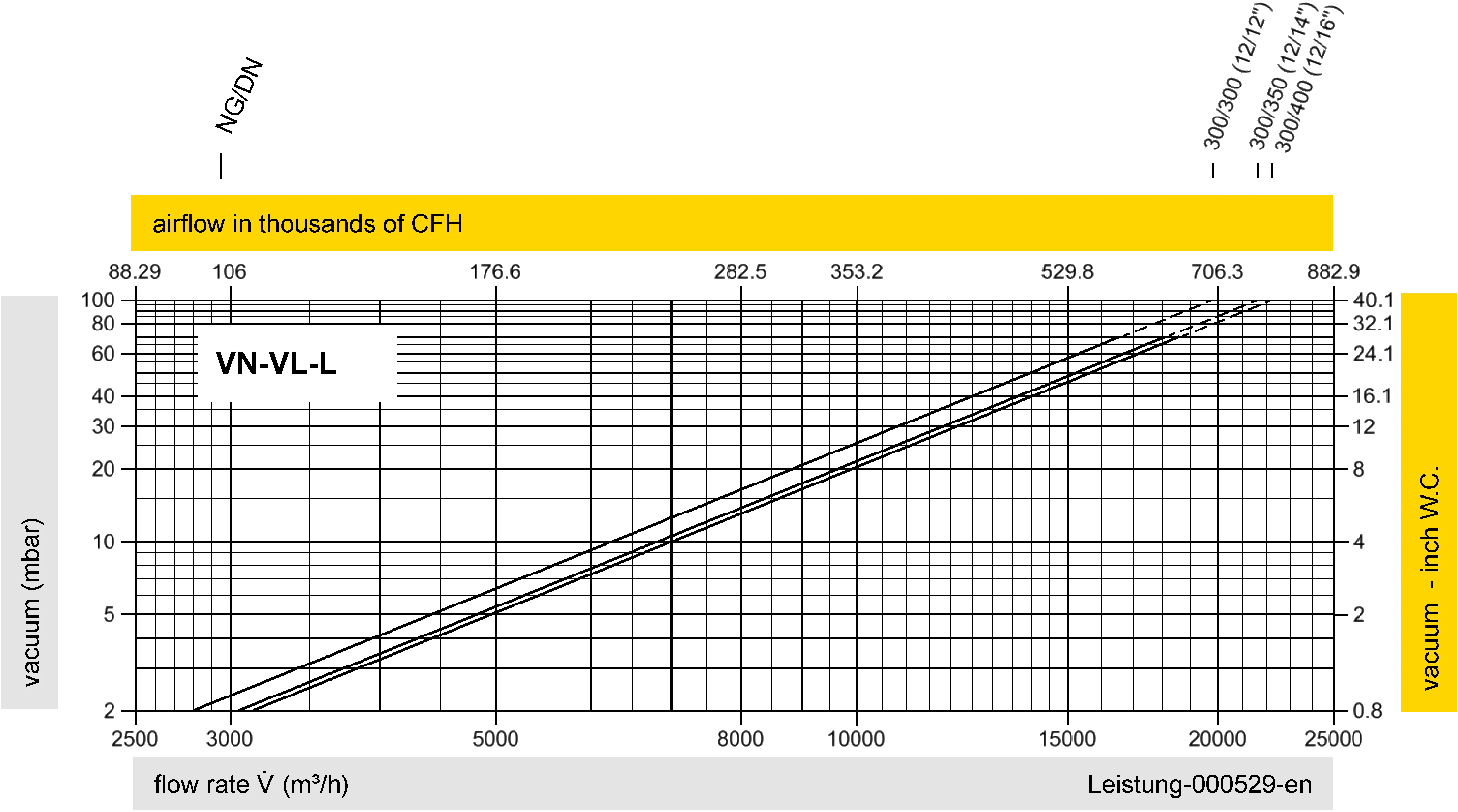
Este diagrama de vazão foi determinado em uma bancada de medição de vazão calibrada e certificada pela TÜV. A vazão V em m³/h se refere ao estado técnico padrão de ar, conforme ISO 6358 (20°C, 1bar). Para conversão em outras densidades e temperaturas, veja o cap. 1: Bases técnicas.

Detalhe X